Asparagus Patina: A Roman Herb-Scented Egg Dish
ANCIENT MEALS · 047 / 100
Late Roman cookbook tradition · Roman Mediterranean · Approximately 390–450 CE compilation, with earlier material
Evidence: adapted surviving recipe. The historical evidence and modern cooking choices are distinguished below.
More than a side of green spears
Apicius offers several asparagus preparations, including cold dishes and custards. The version used here, Book IV's alia patina de asparagis, puts asparagus together with pepper, lovage, green coriander, savoury, and onion, with liquids and oil. Eggs can be added to thicken the mixture. That optional binding is the reason this adaptation becomes a soft savoury egg dish rather than plain boiled spears.
The Latin text lets readers inspect the compact ingredient list and egg instruction. Some details in the old English translation come from editorial explanation, including the sensible assumption that the asparagus is cooked before crushing. Our recipe makes that preparation explicit. It uses mostly chopped tender tips and a few mashed pieces, retaining enough structure to show the vegetable within the egg.
A mortar's aromatic vocabulary
Lovage and savoury are familiar to some gardeners and scarce in other kitchens. Celery leaf and thyme provide accessible substitutions, labelled as substitutions rather than exact equivalents. Coriander means the fresh leafy herb in this selected passage. A little wine and commercial fish sauce provide acidity and salt, but the modern sauce's flavour cannot stand in for every ancient liquamen. These are manageable culinary choices built around the text's framework.
The dish differs from a modern quiche because it has no pastry and no added cream or cheese. It also differs from the pear patina elsewhere in this collection: here a green vegetable and herbs form a savoury, softly stirred preparation, while the fruit recipe is a set baked custard. The shared vessel name does not erase those practical distinctions. Ancient culinary categories need not map neatly onto contemporary menu headings.
Taking the optional egg seriously
Gentle heat keeps the mixture tender, but food safety still requires the egg to cook through. A modern covered frying pan allows control that a reader of the short ancient text cannot recover precisely. Cook the asparagus briefly first, drain it, then finish it with the aromatic mixture and eggs. Too much water will dilute the binding; too much heat will make the egg rubbery.
The historical frame is the late Roman compilation associated with Apicius, approximately fourth to fifth century CE, with earlier strands of material. No particular festival or luxurious banquet is asserted for this dish. Serve small warm portions with bread, using the stated temperature and set texture to judge doneness rather than assuming that every asparagus stalk needs the same minutes.
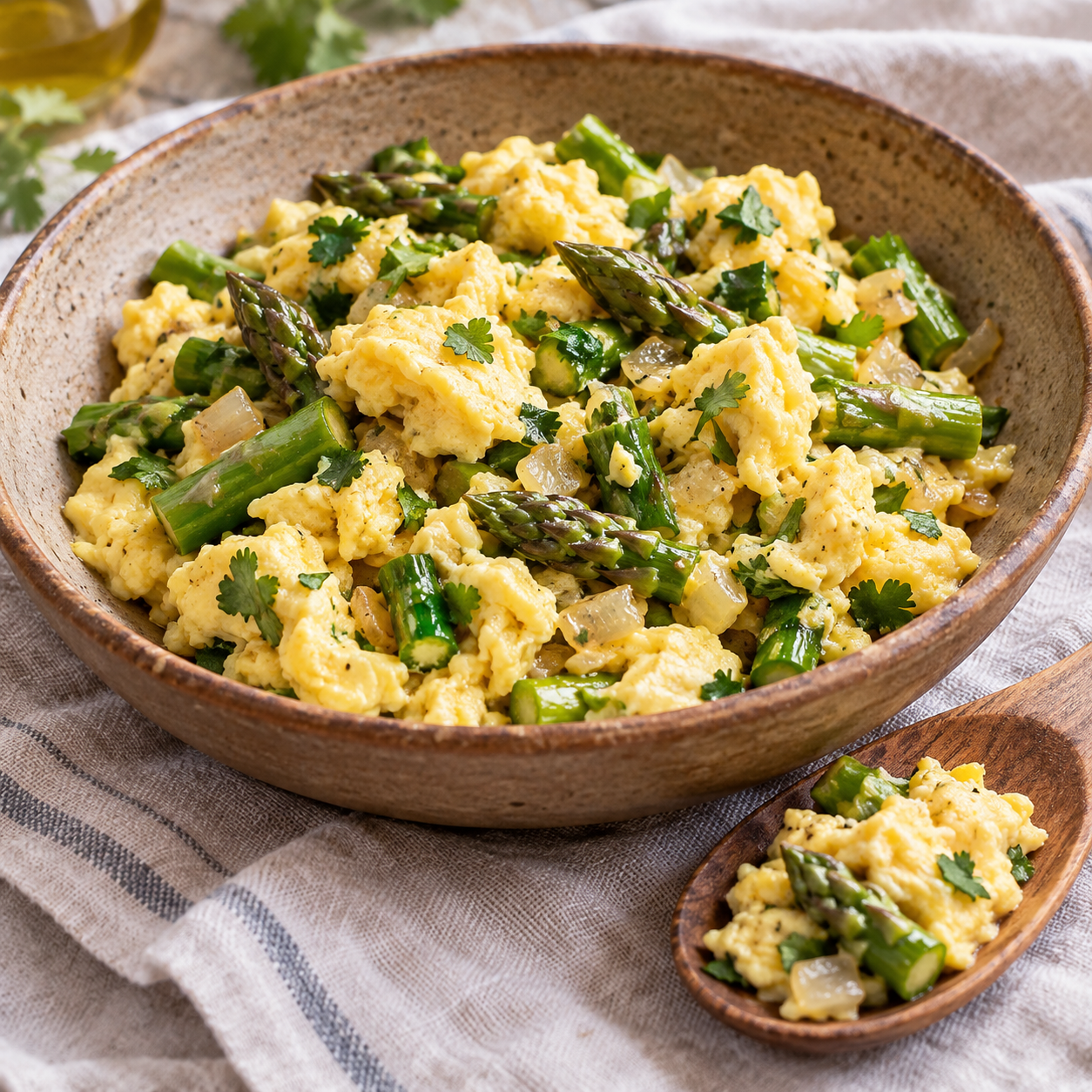
Asparagus-and-herb patina
Serves 4 side portions · Preparation 15 min · Cooking 15 min · None.
A modern adaptation for home cooking. Times are approximate.
Ingredients
- 400 g asparagus, woody ends removed
- 4 large eggs
- 1 small onion, finely chopped
- 1 tbsp olive oil
- 2 tbsp white wine or water
- 1 tsp commercial fish sauce
- 1 tbsp each chopped coriander and celery leaves
- ½ tsp dried savoury or thyme
- ¼ tsp ground black pepper
Method
- Cut asparagus into 2 cm pieces. Simmer in water for 3–5 minutes until tender; drain well and mash one third lightly.
- Soften onion in oil in a covered non-stick pan over medium-low heat for 5 minutes.
- Add asparagus, wine, fish sauce, herbs, and pepper; cook 2 minutes.
- Beat eggs, lower heat, and pour them over the asparagus. Stir gently for 3–5 minutes until softly set and the mixture reaches 71°C/160°F.
- Serve promptly in small warm portions.
Substitutions and adjustments
- Use lovage leaf instead of celery leaf if available.
- Water plus ½ tsp wine vinegar can replace wine; use salt rather than fish sauce for a vegetarian version.
Historical choices: Apicius IV records asparagus with aromatic herbs and optional eggs. This version elects the egg option and uses modern pan cooking and portions.
Kitchen note: Wash asparagus and herbs. Cook eggs through and refrigerate leftovers promptly.
Sources and further reading
- Apicius, Book 4: English translation. Public-domain Vehling translation; editorial additions are distinguished from the ancient instruction.
- Bibliotheca Augustana: Apicius, Latin Book 4. University-hosted primary Latin text for the recorded ingredient and method framework.


Comments
Post a Comment