Salacattabia: A Roman Bread, Cucumber, and Cheese Bowl
ANCIENT MEALS · 045 / 100
Late Roman cookbook tradition · Roman Mediterranean · Approximately 390–450 CE compilation, with earlier material
Evidence: adapted surviving recipe. The historical evidence and modern cooking choices are distinguished below.
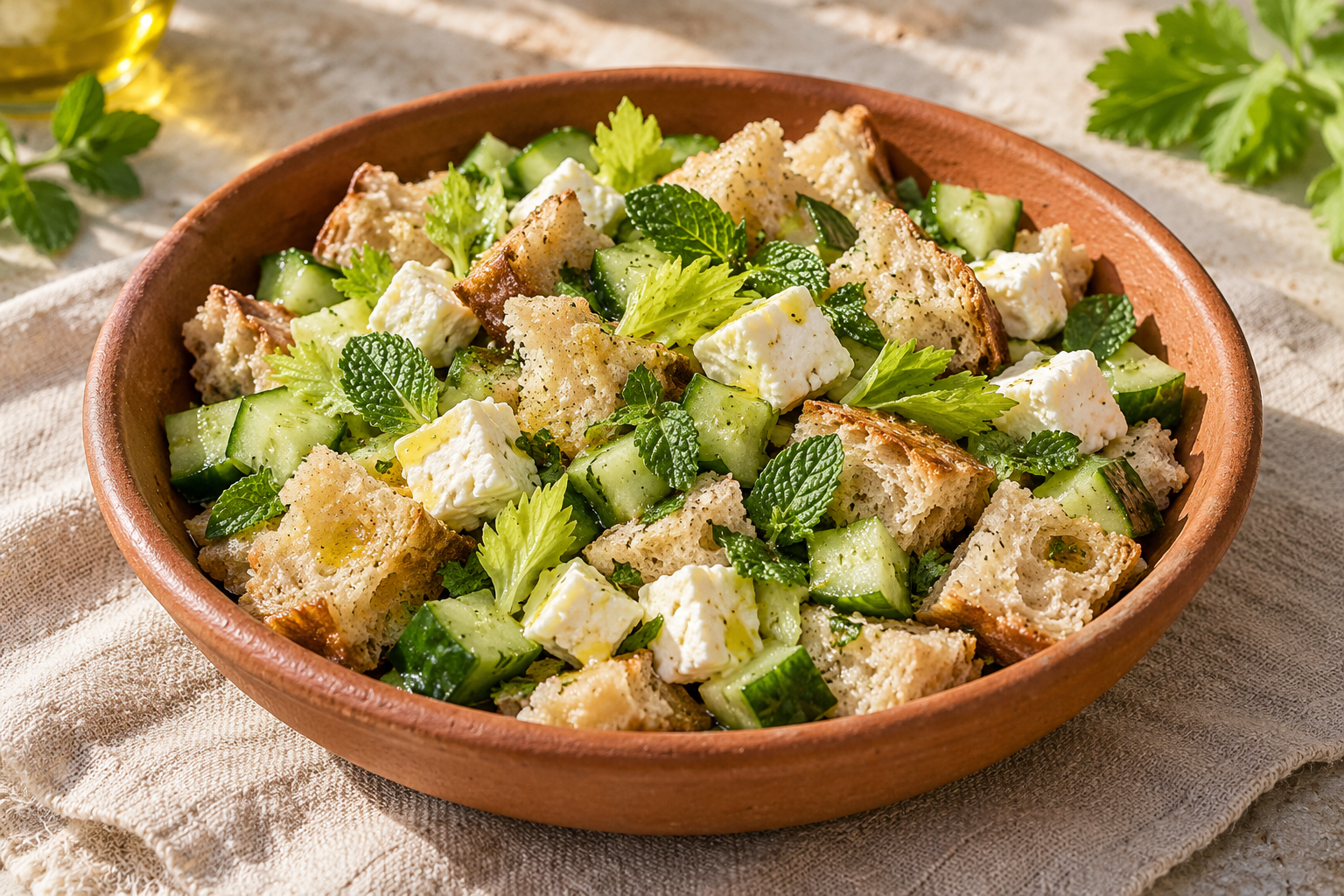
Bread in a different role
At the beginning of Apicius, Book IV, recipes called salacattabia combine bread with an assortment of herbs, dairy, vegetables, nuts, and liquids. One concise version uses soaked bread, cow's-milk cheese, cucumber, oil, and seasonings. These instructions invite a cold assembled dish rather than a loaf, an egg-bound casserole, or a thick grain porridge. Bread becomes a sponge for flavour and part of the finished texture.
The broader recipe group is difficult to reconstruct precisely. The old English translator sometimes describes jelly, congealing, or a mould, and supplies culinary interpretations beyond the shortest Latin instructions. The Latin text is useful for seeing that these are related but not identical versions. This adaptation follows the simple bread-cucumber-cheese combination and serves it in a bowl. It does not claim that every salacattabia was a gelatin-set terrine.
A cold dish with deliberately limited additions
The dressing uses celery leaf, mint, pepper, vinegar, and olive oil. The bread is briefly moistened, then squeezed gently so the result is pleasantly soft rather than floating. Fresh pasteurized cheese adds a contrasting texture, and cucumber supplies crispness. A small amount of commercial fish sauce offers a modern salty analogue for the Roman seasoning liquids. Leaving it out is possible, but changes the seasoning relationship.
This is not labelled an ancient form of any specific modern bread salad. Similar ingredients and techniques can be a helpful comparison, yet they do not establish direct continuity. Nor should a later translator's word for jelly be treated as proof that a modern packet of gelatin belongs in the simplest ancient formula. The recipe below makes its choices visible: no gelatin, no raw egg, no liver, and no hazardous pennyroyal are required for this selected version.
From the text to the table
The historical frame is the late Roman Apicius compilation, approximately fourth to fifth century CE, with earlier material incorporated into its recipe tradition. No particular festival or geographic origin is assigned to this bowl merely from its name. The important story is a recorded change in bread's purpose: it can carry dressing and provide substance after baking is finished.
Assemble shortly before serving so the cucumber remains distinct. Keep all cold ingredients refrigerated beforehand, and use bread that is sound, not mouldy. Quantities, chilling time, and bowl presentation are modern decisions. The liquid amount should be adjusted to the bread's dryness rather than treated as a rigid recovered ancient measurement.
Cold bread, cucumber, and fresh-cheese salacattabia
Serves 4 light portions · Preparation 20 min · Cooking 0 min · Chill 20 minutes.
A modern adaptation for home cooking. Times are approximate.
Ingredients
- 250 g fully baked day-old wheat bread, crusts trimmed if hard
- 100–150 ml cold drinking water
- 1 medium (about 250 g) cucumber, washed and diced
- 200 g pasteurized fresh cow's-milk cheese, cubed
- 2 tbsp olive oil
- 1 tbsp wine vinegar
- 1 tsp commercial fish sauce
- 1 tbsp each chopped mint and celery leaves
- ¼ tsp black pepper
Method
- Tear bread into small pieces. Sprinkle with 100 ml cold water, rest 3 minutes, and add more only if the centre stays hard.
- Gently squeeze excess water from the bread and place in a serving bowl.
- Whisk oil, vinegar, fish sauce, pepper, and washed chopped herbs.
- Fold bread, cucumber, and cheese together with dressing, keeping some pieces distinct.
- Chill 20 minutes and serve promptly.
Substitutions and adjustments
- Use pasteurized mozzarella or unsalted farmer's cheese.
- For a fish-free version, replace fish sauce with salt to taste; add gradually.
Historical choices: Based on the simple salacattabia in Apicius IV. Bowl presentation and proportions are modern; no gelatin or unsafe herb is inferred from the related more elaborate versions.
Kitchen note: Use pasteurized cheese and clean cucumber. Keep the assembled bowl chilled and refrigerate leftovers within two hours.
Sources and further reading
- Apicius, Book 4: English translation. Public-domain Vehling translation; editorial expansions and uncertain plant names require caution.
- Bibliotheca Augustana: Apicius, Latin Book 4. University-hosted primary Latin text used to check the recipe's ingredient and method framework.


Comments
Post a Comment