Stuffed Sardines: Mint, Nuts, and Steam in Apicius
ANCIENT MEALS · 053 / 100
Late Roman cookbook tradition · Roman Mediterranean · Approximately 390–450 CE compilation, with earlier material
Evidence: adapted surviving recipe. The historical evidence and modern cooking choices are distinguished below.
A fish made into a parcel
The stuffed sardine instruction in Apicius, Book IX asks for a boned fish filled with pepper, mint, nuts, and honey, with another aromatic herb named in the text. The fish is secured, wrapped, and cooked above rising steam. The technique is the compelling part of the story. Instead of frying a small fish until crisp, the cook encloses a filling and protects the fish from direct contact with intense heat.
The Latin text supplies the stuffed preparation's framework, while leaving important practical details unresolved. Ancient fish names can be difficult to align with present species, and translations differ. This adaptation uses professionally cleaned, butterflied sardines because they make a manageable modern purchase. The title describes that choice, not a guaranteed identification of every ancient sarda.
Inside the fish
Pine nuts give the filling body, mint adds aroma, pepper supplies warmth, and a little honey binds the mixture. Potentially hazardous pennyroyal or uncertain related herb identifications are omitted. A small amount of oil softens the filling. No bread crumbs, cheese, raw egg, or garlic are added, keeping the selected combination clear. Because there is no raw meat stuffing, the fish itself provides the main modern doneness check.
Food-safe parchment replaces a historical wrapping without suggesting that the modern factory-made product is identical. A steamer basket above simmering water supplies controlled moist heat. Ancient tying or sewing becomes small wooden cocktail sticks, counted and removed before serving. These substitutions make the method practical while retaining the parcel structure that distinguishes this dish from an ordinary fillet with sauce.
The small details that survive
Apicius's late Roman compilation, approximately fourth to fifth century CE, preserves this particular written preparation but does not specify a festival or a social setting for it. The technique requires care and time, yet that alone does not prove a luxurious banquet. The recorded boning, filling, securing, and wrapping are enough to convey a skilled cook's attention.
Inspect the fish for remaining bones, fill it modestly, and give each parcel space for steam to circulate. Small fish cook quickly, so check the centre rather than relying on a fixed number of minutes. The modern quantities, pine-nut choice, and final honey-grape finish are interpretive decisions; the historical anchor is a stuffed and wrapped fish cooked with moist heat.
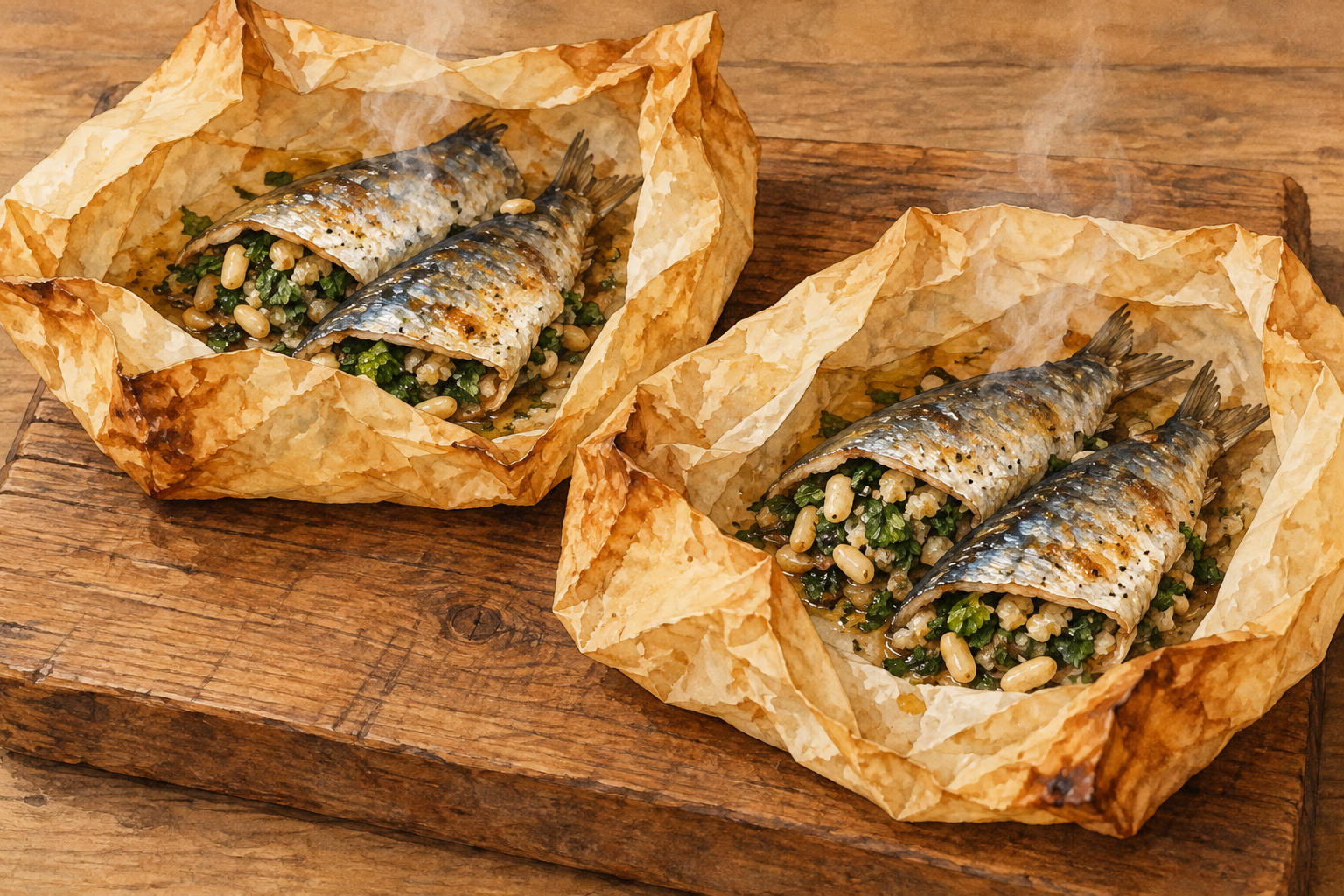
Mint-and-pine-nut stuffed sardines
Serves 4 starter portions · Preparation 25 min · Cooking 15 min · None.
A modern adaptation for home cooking. Times are approximate.
Ingredients
- 8 medium fresh sardines, professionally cleaned, boned, and butterflied
- 50 g pine nuts, finely chopped
- 2 tbsp washed fresh mint, finely chopped
- 1 tsp honey
- 2 tsp olive oil, divided
- ¼ tsp black pepper
- 1 tbsp unsweetened grape juice, optional finish
- ½ tsp dried oregano
Method
- Inspect butterflied sardines for remaining bones. Mix pine nuts, mint, honey, 1 tsp oil, and pepper.
- Divide filling among fish and fold each closed without overstuffing. Secure each with one small wooden stick.
- Wrap pairs loosely in food-safe baking parchment, folding edges to make four parcels.
- Place parcels in a steamer above simmering water. Cover and steam 10–15 minutes until the thickest fish reaches 63°C/145°F and is opaque.
- Open carefully away from your face. Remove and count all sticks; drizzle remaining oil, optional grape juice, and oregano over the fish.
Substitutions and adjustments
- Small butterflied trout fillets can be folded around filling but need longer cooking and are a fish-species adaptation.
- Use walnuts if pine nuts are unavailable, changing the filling flavour.
Historical choices: Apicius IX preserves boned stuffed fish, mint/nuts/honey, wrapping, and steam-like cooking. Modern sardines, parchment, and the omitted uncertain herb are adaptations.
Kitchen note: Use fresh fish from a reputable supplier, keep cold until cooking, check for bones, cook to 63°C/145°F, and remove every securing stick.
Sources and further reading
- Apicius, Book 9: English translation. Public-domain Vehling primary-text translation; editorial additions and species identifications need caution.
- Bibliotheca Augustana: Apicius, Latin Book 9. University-hosted primary Latin text for the dish's recorded method and ingredients.


Comments
Post a Comment