Milk and “Soakies”: Babylonian Lamb with Barley Cakes
ANCIENT MEALS · 006 / 100
Old Babylonian · Southern Mesopotamia, modern Iraq · Approximately 1750–1700 BCE
Evidence: adapted surviving recipe. The historical evidence and modern cooking choices are distinguished below.
Grain enters twice
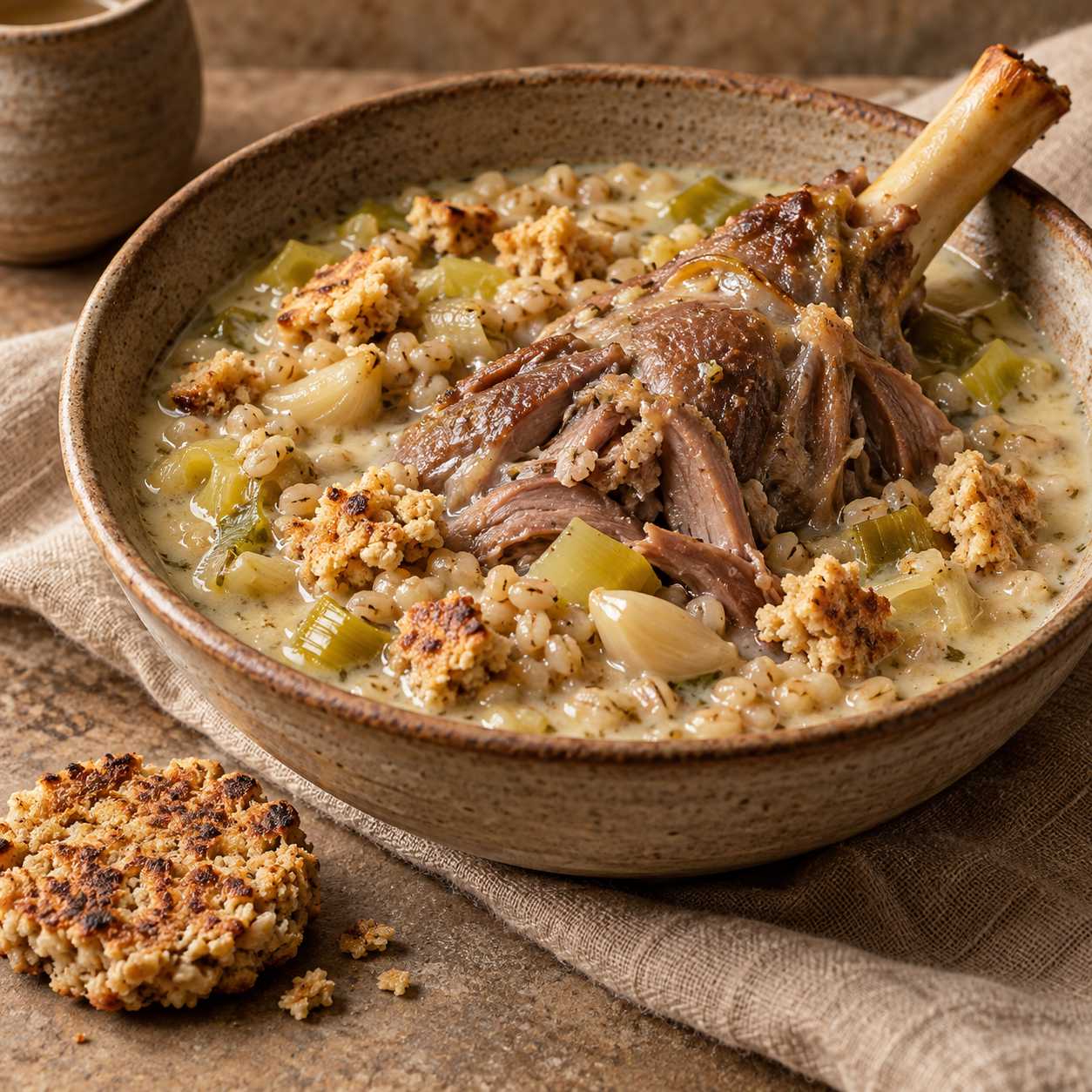
Grain can accompany meat as bread, or it can enter the sauce itself. This Babylonian lamb dish takes the second route. In the scholarly translation and reconstruction of m. puhādi, grain cakes soften into a milk-enriched pot. The interpreted cakes are sometimes playfully described as “soakies,” a reminder that a food word may refer to what an ingredient does rather than to a recognisable modern product.
The written source belongs to eighteenth-century-BCE southern Mesopotamia. The Yale–Harvard project report distinguishes a lamb dish with milk and grain cakes from its beetroot stew. That is why this recipe deserves its own place: its central operation is the dissolution of prepared grain into a dairy braise, rather than a colour or seasoning change to the same stew.
A measured modern interpretation
For this adaptation, cooked barley is mixed with flour and a little butter, shaped into thin cakes and baked dry. Some are crushed into the simmering lamb; others can remain more substantial. Making the cakes separately is an extra step, but it gives the recipe its particular structure. Substituting loose dry flour directly into the broth would simplify the work while removing that feature.
The milk will not necessarily stay perfectly smooth during a long simmer. A rustic sauce with fine curds is compatible with this modern method; it is not a sign that the historical interpretation has failed. Pasteurized milk, small lamb shanks and oven-baked cakes are contemporary kitchen choices. The exact grain ratio, temperature and cooking time are supplied here, rather than recovered from an ancient list of measurements.
Reading through texture
Watch the pot as it cooks. A crisp cake first floats or sinks as a separate object, then softens at its edges. Stirring breaks it further, changing the sauce from liquid to something that clings to the meat. This gives the cook a useful way to understand the interpreted function of the grain cakes. It does not settle every question about their original ingredients or whether different cooks preferred different sizes.
Serve in shallow bowls, with a spoonful of gently cooked leek on top. Avoid adding a modern tomato base, which would overwhelm the dairy-and-grain contrast. Adjust the water to keep the pot from catching and let meat tenderness guide the final timing. The exercise is specific: preserve a documented milk-and-grain cooking idea, while showing where an accessible modern method begins.
Lamb braised with milk and crumbled barley cakes
Serves 4 · Preparation 30 min · Cooking 160 min · None
A modern adaptation for home cooking. Times are approximate.
Ingredients
- 4 small (about 1.2 kg total) lamb shanks
- 100 g pearl barley
- 70 g wholemeal wheat or emmer flour
- 20 g butter, for cakes
- 2 tbsp oil, for lamb
- 1 onion, chopped
- 200 g leek, thoroughly washed and sliced
- 2 garlic cloves, crushed
- 600 ml pasteurized whole milk
- 450 ml water, divided, plus extra
- ¾ tsp salt
Method
- Boil barley in plentiful water for 25–30 minutes until tender. Drain well. Heat oven to 190°C/375°F.
- Mix barley, flour, butter and 2 tbsp water into a rough dough. Press into six thin cakes on a lined tray. Bake 25 minutes until firm and browned.
- Brown shanks in oil in a heavy pot for 8 minutes. Add onion and cook 5 minutes. Add half the leek, garlic, milk, 350 ml water and salt.
- Bring to a gentle simmer. Add four cakes, roughly broken. Cover loosely and cook 110–140 minutes until lamb is tender; stir and add water if needed.
- Cook remaining leek in the pot for the final 10 minutes. Serve with remaining cakes crumbled over each bowl.
Substitutions and adjustments
- Commercial plain wholemeal rusks can replace the homemade cakes as a convenience; the grain mixture changes.
- Use beef chuck instead of lamb and cook until very tender.
Historical choices: Adapted written lamb-and-milk preparation. Barley-cake proportions and modern baking instructions are our own.
Kitchen note: Use pasteurized milk and fully cooked meat. Cool and refrigerate within 2 hours.
Sources and further reading
- Scholarly Yale tablet essay. Milk, lamb and grain cakes in the interpreted surviving instruction.
- Yale–Harvard reconstruction project. Independent description distinguishes this preparation from beet stew.


Comments
Post a Comment