Beans Before the Loaf: An Ahihud-Inspired Fava Mash
ANCIENT MEALS · 008 / 100
Pre-Pottery Neolithic B · Lower Galilee, southern Levant · Approximately 8250–7500 BCE
Evidence: archaeological reconstruction. The historical evidence and modern cooking choices are distinguished below.
Start with the bean store
A bread-centred picture of early farming can miss another staple: the bean. The Weizmann account of discoveries at Ahihud and neighbouring Lower Galilee sites describes substantial quantities of charred fava beans. These remains belong to the Pre-Pottery Neolithic B, around ten millennia ago. Their scale makes legumes central to the discussion of early food production rather than an incidental garnish.
The later Scientific Reports study of the faba bean’s ancient progenitor links this research with the longer Levantine history of the crop. Seed identification and dating tell us about plants and cultivation; they do not reveal how one particular family seasoned dinner. Our mash is therefore an archaeological reconstruction of a staple meal format, not a recovered Ahihud recipe.
A deliberately simple cooking experiment
Commercial dried split fava beans make a thick mash without elaborate equipment. They are rinsed, boiled and cooked until soft, then crushed. Olive oil and onion are optional modern serving additions, included for a usable contemporary meal rather than asserted as members of the excavated recipe. If the aim is to focus closely on the bean itself, taste a spoonful before adding either.
We also avoid equating this dish with every later named fava preparation in Egypt or the eastern Mediterranean. Similar ingredients can appear in many food traditions. Archaeology at one early village cannot establish an unbroken genealogy for a modern national dish. The specific point here is the early place of favas in a farming community and the work required to turn a stored dry crop into dinner.
A meal shaped by water and time
The recipe rewards a gentle simmer and occasional stirring. More water produces a spoonable soup; less water produces a mound that can be served on a plate. That spectrum is useful to explore, but the excavated beans do not tell us which consistency ancient diners preferred. A modern saucepan and a measured water quantity make the exercise repeatable while leaving that question open.
Beans can be economical and sustaining, yet collecting, storing, sorting and cooking them all take labour. Making this small batch gives that labour a little visibility without inventing the daily routine of an individual Neolithic household. Use the softness of the beans to judge doneness, and use chickpeas if you have been advised to avoid favas. The finished bowl is a modern illustration of a documented staple, with its seasonings and texture stated as choices rather than archaeological facts.
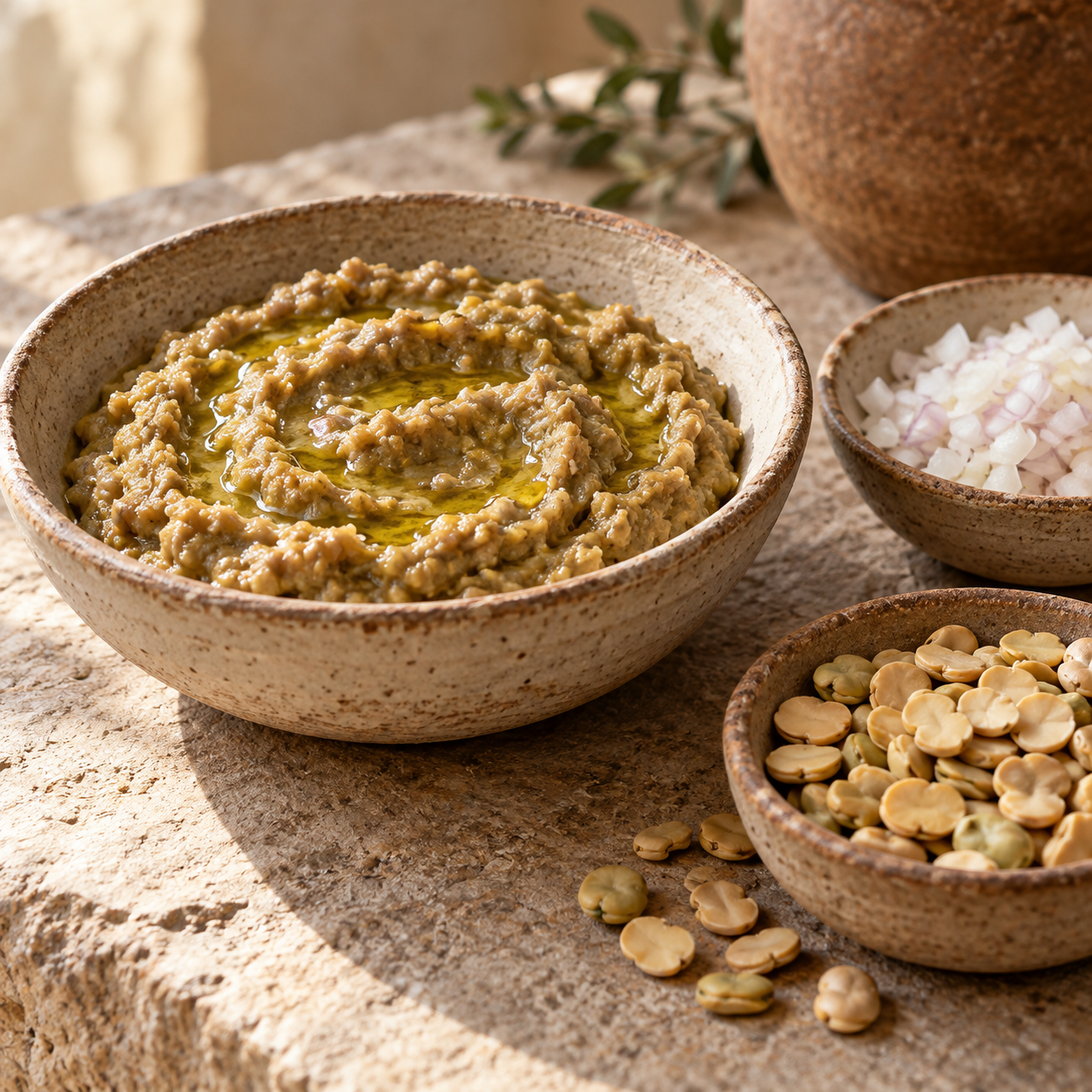
Simple split-fava bean mash
Serves 4 · Preparation 10 min · Cooking 60 min · None
A modern adaptation for home cooking. Times are approximate.
Ingredients
- 250 g commercial dried peeled split fava beans
- 1 litre water, plus extra as needed
- ½ tsp salt
- 2 tbsp olive oil, optional modern topping
- ½ small onion, finely chopped, optional modern topping
Method
- Sort and rinse beans. Put in a saucepan with 1 litre water.
- Bring to a full boil, then simmer 45–60 minutes until completely soft, adding water to keep beans submerged.
- Drain only if very watery; reserve liquid. Mash thoroughly, adding reserved liquid for a soft spoonable consistency.
- Season with salt. Serve warm, optionally topped with oil and onion.
Substitutions and adjustments
- If advised to avoid fava beans, use cooked chickpeas instead; this changes the archaeological focus.
- Canned cooked favas shorten simmering to 10 minutes.
Historical choices: Reconstruction from a specific Neolithic bean assemblage. Mash texture, salt, oil and onion quantities are modern; no ancient recipe survives.
Kitchen note: Use commercial food-grade favas and cook fully. People with G6PD deficiency (favism), or anyone advised to avoid fava/broad beans, should avoid this recipe’s favas and use the chickpea substitution.
Sources and further reading
- Weizmann: early fava farming. Large charred-bean finds at Ahihud, Nahal Zippori and Yiftah’el.
- Scientific Reports: ancient faba progenitor. Primary archaeobotanical context and crop history; no cooking instructions.
- University College London Hospitals: G6PD deficiency. Current ingredient-safety guidance identifies fava/broad beans as a trigger in G6PD deficiency. This is modern safety guidance, not historical evidence.


Comments
Post a Comment