Honey and Marrow in a Sixth-Century Oven
ANCIENT MEALS · 074 / 100
Qimin yaoshu compilation, citing the Shijing food manual · Northern China · c. 530–550 CE
Evidence: adapted surviving recipe. The historical evidence and modern cooking choices are distinguished below.
Sweetness meets animal fat
Some ancient recipes are striking because their ingredients still make culinary sense, even when the combination feels unfamiliar. A short entry for marrow cakes in the Qimin yaoshu baking chapter mixes marrow fat and honey with flour, specifies broad cakes, and puts them into a bread oven. The Chinese Academy of Sciences discussion relates the entry to the specialized oven used for hu breads. The technique is baking, not boiling a honey porridge.
Marrow is the soft tissue inside bones. Its fat can enrich dough in the same practical way other fats do, although its flavor is distinctive. Honey supplies sweetness and moisture. The source does not give our flour-to-fat ratio, and the historical cake dimensions should not be converted casually into a modern biscuit size. Our small rounds are a deliberate adaptation for an ordinary oven.
A book that keeps other books alive
The manual often cites earlier culinary works rather than claiming to invent every entry. This cake belongs to that pattern of preservation. A surviving quotation can be the only usable trace of an otherwise poorly preserved food text. It makes the compiler's choices matter: what was selected, how it was copied, and what practical knowledge was presumed.
We roast commercially purchased marrow bones, scoop out the cooked marrow, and use a measured weight in the dough. That removes a messy uncertainty from the baking stage. A little water brings the flour together, and cooling the dough makes shaping easier. Those are modern instructions, not translated ancient clauses. They are written so that the historical combination has a plausible present-day route from ingredient to plate.
Keep the format honest
These should be described as small honey-and-marrow biscuits inspired by the ancient cakes, not as exact replicas. Their scale, baking sheet, thermometer-controlled oven, and chosen proportions are ours. Calling the dough a biscuit helps today's cook understand the intended texture, while the story explains the original category.
Serve the rounds warm rather than using the old text's favorable keeping description as a preservation rule. A historical author's enthusiasm is not a safe storage test. Its strongest claim is narrow and useful: a sixth-century compilation records flour, honey, marrow fat, and oven baking together. The finished food makes that combination tangible without borrowing certainty the source does not provide.
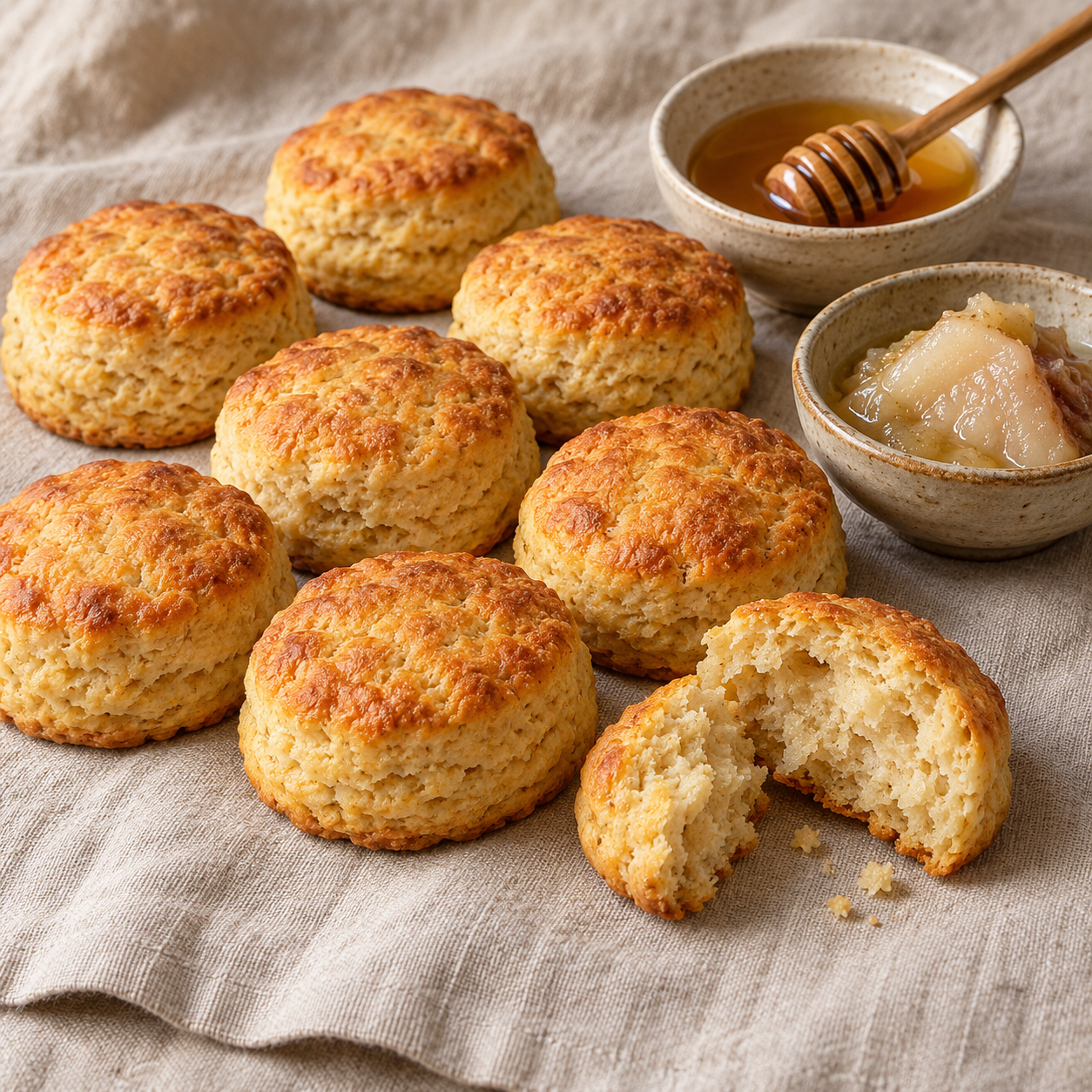
Small honey-and-marrow biscuits
Serves 8 · Preparation 25 min · Cooking 40 min · 15 minutes chilling; 10 minutes cooling
A modern adaptation for home cooking. Times are approximate.
Ingredients
- 400–500 g commercial beef marrow bones, enough for 60 g cooked marrow
- 180 g plain wheat flour
- 60 g cooked scooped marrow
- 50 g honey
- 25–40 ml water
- 1 g salt
Method
- Heat oven to 220°C. Place marrow bones on a rimmed tray; roast 15–20 minutes until marrow is thoroughly hot. Scoop and weigh 60 g marrow; let cool until warm.
- Reduce oven to 180°C. Mix flour and salt. Rub in warm marrow, then stir in honey and 25 ml water, adding more by teaspoons to make a firm dough.
- Chill covered for 15 minutes. Divide into eight balls and flatten to 1 cm thick rounds on a lined tray.
- Bake 18–22 minutes until lightly browned and cooked through. Cool 10 minutes before serving.
Substitutions and adjustments
- Use 60 g unsalted butter instead of marrow for a clearly labeled modern alternative.
- Do not use raw bone marrow directly in the finished dough.
Historical choices: The marrow-fat, honey, flour and baking combination is preserved; small biscuit format and proportions are modern.
Kitchen note: Use butcher-supplied food-grade bones, handle raw ingredients hygienically, and refrigerate cooled leftovers within 2 hours. Honey is unsuitable for infants under 12 months.
Sources and further reading
- Qimin yaoshu, volume 9 marrow cake entry. Public-domain primary text preserves the flour, marrow-fat, honey and oven method.
- Chinese Academy of Sciences discussion of northern food technologies. Explains the bread oven and the marrow cake passage; no modern storage or baking validation.


Comments
Post a Comment