Sweet-Sour Turnips: A Roman Mash with Cumin
ANCIENT MEALS · 056 / 100
Late Roman cookbook tradition · Roman Mediterranean · Approximately 390–450 CE compilation, with earlier material
Evidence: adapted surviving recipe. The historical evidence and modern cooking choices are distinguished below.
Softness is part of the instruction
The turnip preparation in Apicius, Book III begins by cooking the roots soft and removing their excess water. It then adds an aromatic seasoning with cumin and acidic or sweet-sour liquids. That opening matters. This is a dish built around tender root texture rather than the browned edges of the fried carrots elsewhere in the collection. The adaptation lightly mashes the cooked turnips so their body carries the dressing.
The Latin rapas sive napos is worth comparing with the older English translation because punctuation and textual readings affect the honey-and-vinegar interpretation. The English editor discusses the ambiguity rather than offering an uncontested formula. This version follows a sweet-sour reading with a restrained amount of honey. That choice is declared; it does not erase the alternatives preserved in the recipe's transmission.
Water can dilute a flavour
Turnips retain cooking water, so draining them well gives the sauce a chance to matter. Let them steam dry briefly in the warm pan, then mash roughly. A smooth restaurant purée is not required. Cumin supplies the main seed aroma, while a small pinch of commercial asafoetida offers a manageable approximation for a laser-related ingredient. Rue is omitted rather than recommended to a present home cook.
Commercial fish sauce is used sparingly for the salty liquid. Honey and vinegar should work against the mild bitterness of the root without concealing it. Modern turnips differ in size and strength; small young roots may need less sweetness than large storage turnips. The measurements below therefore provide a starting point rather than an exact ancient balance recovered from a page.
Keeping the historical choice visible
The dish belongs to the late Roman Apicius compilation, approximately fourth to fifth century CE, with earlier material incorporated. Neither the root names nor the short instructions identify a particular farm, festival, or diner. They do record a method that pays attention to softness, draining, and seasoning. Those concrete details are more valuable than an invented claim that every Roman ate the dish in the same way.
Serve the mash warm in small portions, perhaps beside a roast or a cooked loaf. It contains no butter, cream, potatoes, or cheese. Add the honey gradually and finish with a brief reheating so the flavours combine. The modern rough mash, quantities, omitted herb, and food-safe cookware are adaptations, while the cooked-turnip and cumin framework rests directly on the surviving text.
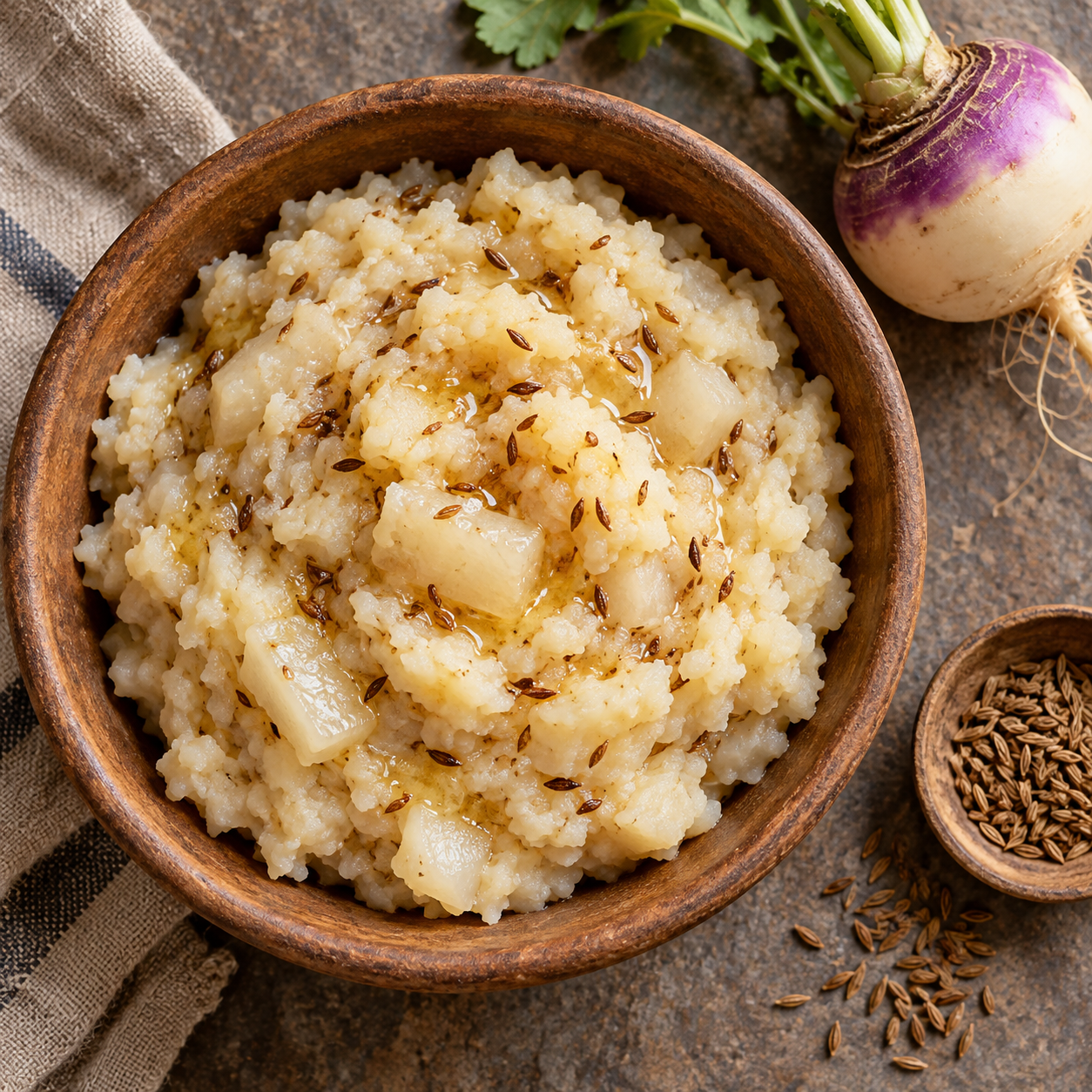
Turnip mash with cumin, honey, and vinegar
Serves 4 side portions · Preparation 15 min · Cooking 25 min · Steam dry 3 minutes.
A modern adaptation for home cooking. Times are approximate.
Ingredients
- 600 g turnips, peeled and cut into 2 cm pieces
- 1 tbsp olive oil
- 1 tsp ground cumin
- 1 tbsp wine vinegar
- 1–2 tsp honey
- 1 tsp commercial fish sauce
- 1 small pinch commercial food-grade asafoetida, optional
Method
- Simmer turnips in water for 15–20 minutes until very tender. Drain thoroughly.
- Return to the warm empty pan over low heat for 2–3 minutes to evaporate excess water.
- Roughly mash. Add oil, cumin, vinegar, 1 tsp honey, fish sauce, and optional asafoetida.
- Heat gently for 3 minutes, stirring. Taste and add the second teaspoon of honey only if needed.
- Serve warm in four small portions.
Substitutions and adjustments
- Use small white turnips rather than strongly flavoured swede for the closest practical root choice.
- Replace fish sauce with a little salt; omit asafoetida if unavailable rather than using unidentified wild aromatics.
Historical choices: Based on Apicius III's turnip instruction and a Latin sweet-sour reading. Rough mashing, amounts, asafoetida, and omitted rue are declared modern choices.
Kitchen note: Use ordinary edible turnips and commercial food-grade seasonings. Cook roots fully and refrigerate leftovers.
Sources and further reading
- Apicius, Book 3: English translation. Public-domain Vehling translation; differences from the primary Latin are discussed where relevant.
- Bibliotheca Augustana: Apicius, Latin Book 3. University-hosted primary Latin text used to check the selected recipe's framework.


Comments
Post a Comment